Basevio
Tier Library
Tier Library
Couldn't load pickup availability
Share
Self-paced learning overview
- 📘 Digital file available after purchase
- 🗂️ Long-term availability
- 🔒 Secure checkout
- 🗓️ Content updated in 2026
1. Problem Statement
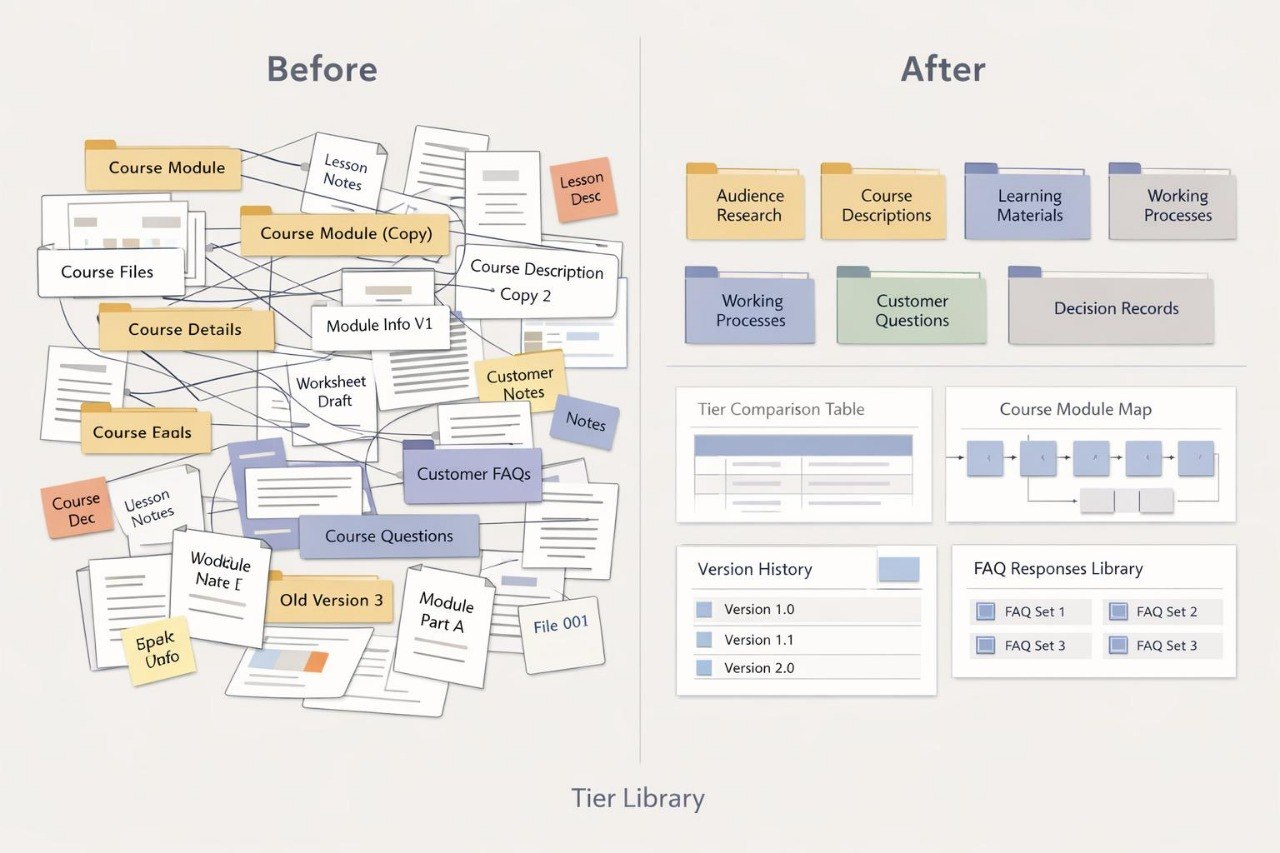
Struggling to organize your materials, ideas, and offer variations into one connected system? You’re not alone. After the early research stage, notes, worksheets, audience descriptions, and several versions of a course or service can accumulate quickly. Some information may be repeated, while important decisions remain stored only in separate documents or personal notes. When offer levels do not have defined boundaries, customers may find it difficult to understand how they differ. Without an organized material library, a course creator or team may need to reconstruct earlier decisions whenever something is updated.
2. Solution
This course will teach you how to create a structured library for your first business. You will define the role of each course, material package, or interaction format within the wider offer system. The lessons will help you divide core, supporting, and internal resources into clear categories. You will prepare consistent rules for names, descriptions, versions, and working documents. By the end of the course, you will have an offer-tier map and an organized material system for continued use.
3. What’s Inside
Module 1: The Library Framework
You will identify the main information categories required for your first business. These may include audience research, course descriptions, learning materials, working processes, customer questions, and records of important decisions.
Module 2: Offer Tier Logic
You will examine how different tiers can vary by subject range, material volume, level of detail, and learning format. The module assignment will help prevent the same content from being repeated without a clear reason across several tiers.
Module 3: Course Content Architecture
You will create a course diagram connecting modules, lessons, assignments, and supporting resources with defined learning objectives. Each element will receive a clear purpose and position within the overall sequence.
Module 4: Naming and Description Rules
This module helps you establish one approach for naming courses, modules, files, and internal documents. You will also prepare a description template covering the subject, format, intended audience, included content, and material boundaries.
Module 5: Version and Change Records
You will learn how to document changes made to courses and working files. A version table will record the update date, reason for the change, revised sections, and responsible team member.
Module 6: Customer Question Library
You will collect common questions about the learning format, materials, payments, course completion, and certificates. You will then assign each question to the FAQ page, tier descriptions, or internal team responses.
Module 7: Tier Library Map
In the final module, you will combine the tier structure, material catalogue, naming rules, change records, and question library into one working map.
4. Who Is This For?
✅ A good fit if you:
- already have several courses, packages, or offer variations;
- want to explain the differences between tiers clearly;
- work with a growing collection of notes and learning materials;
- plan to involve other people in course preparation;
- want to document updates and important decisions.
❌ Not a fit if you:
- have not yet outlined a general business idea;
- do not plan to create several courses or offer levels;
- expect completed materials without independent work;
- require personalized legal, accounting, or tax advice.
5. What You’ll Learn
After completing the course, you will be able to:
- create at least five categories for a working library;
- describe the differences between three or more tiers;
- prepare a module map for one course;
- create one consistent course-description template;
- establish a naming system for files and documents;
- prepare a version and update record;
- collect at least twenty questions for a response library;
- combine the materials into one structured working map.
6. 30-Day Refund Request Policy
A refund request for Tier Library may be submitted within 30 calendar days of the order date. Requests are reviewed according to the terms published on the Basevio website, the course description, and applicable consumer protection rules. The submission process, review period, and possible exceptions are stated on the refund policy page.
7. Certificate
A Basevio certificate is provided after all required modules, practical assignments, and the final review have been completed. The certificate identifies the Tier Library curriculum and lists the subjects covered.
Who are Basevio courses created for?
Who are Basevio courses created for?
Basevio courses are created for people who are considering their first business idea or have already started working on one. The materials help learners examine a direction, audience, offer, working processes, and next decisions in a logical sequence. Previous business experience is not required.
How are the materials presented?
How are the materials presented?
Each tier contains thematic modules, written explanations, examples, worksheets, checklists, and independent assignments. The exact content depends on the selected tier, with later levels covering a broader range of subjects and including additional practice materials.
Can I study at my own pace?
Can I study at my own pace?
Yes. You can organize your own study schedule, return to earlier topics, and complete assignments in a suitable sequence. We recommend following the core modules in order because later subjects build on concepts introduced at the beginning.
Is a certificate provided?
Is a certificate provided?
Yes. A Basevio certificate is provided after all required modules, practical assignments, and the final course review have been completed. It confirms participation in the learning program but does not represent a government qualification, business licence, or legal permission to operate.